LOKAL IDENTITET OG KULTUREL MARKØR FOR ET BÆREDYGTIGT FÆLLESKAB
En bys kulturhus kan spores helt tilbage til bondesamfundet. Her var de hyppige og årligt tilbagevendende fester en vigtig del af det sociale liv.
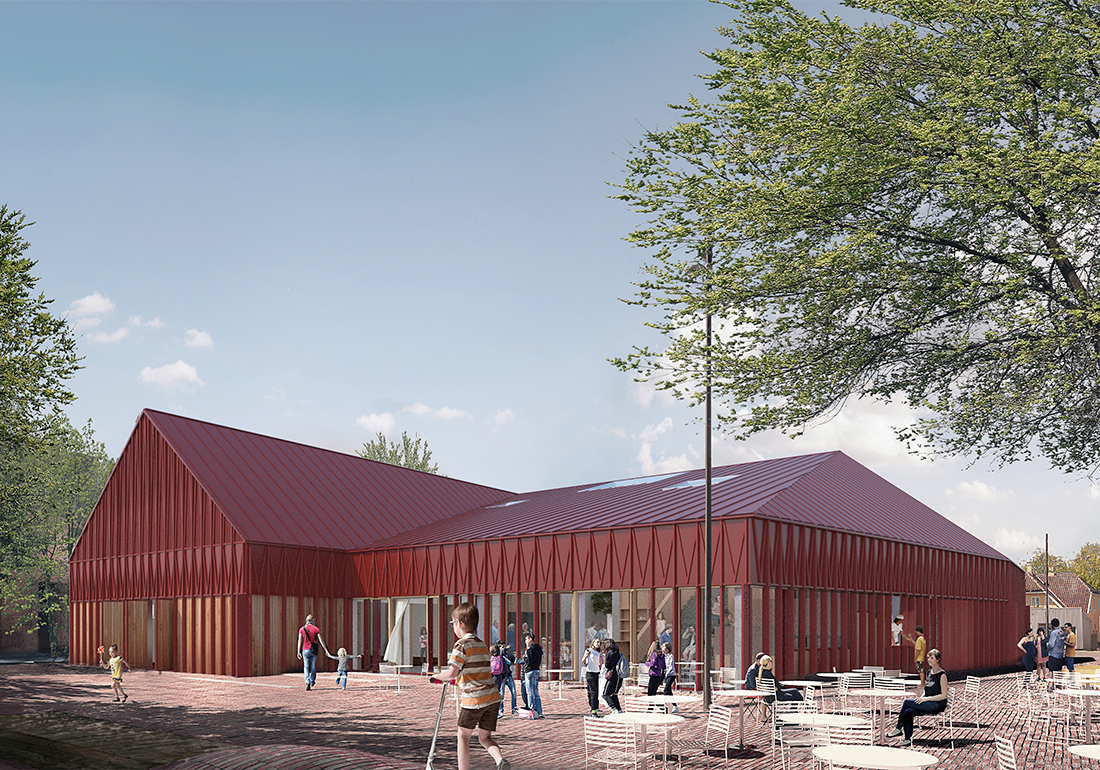
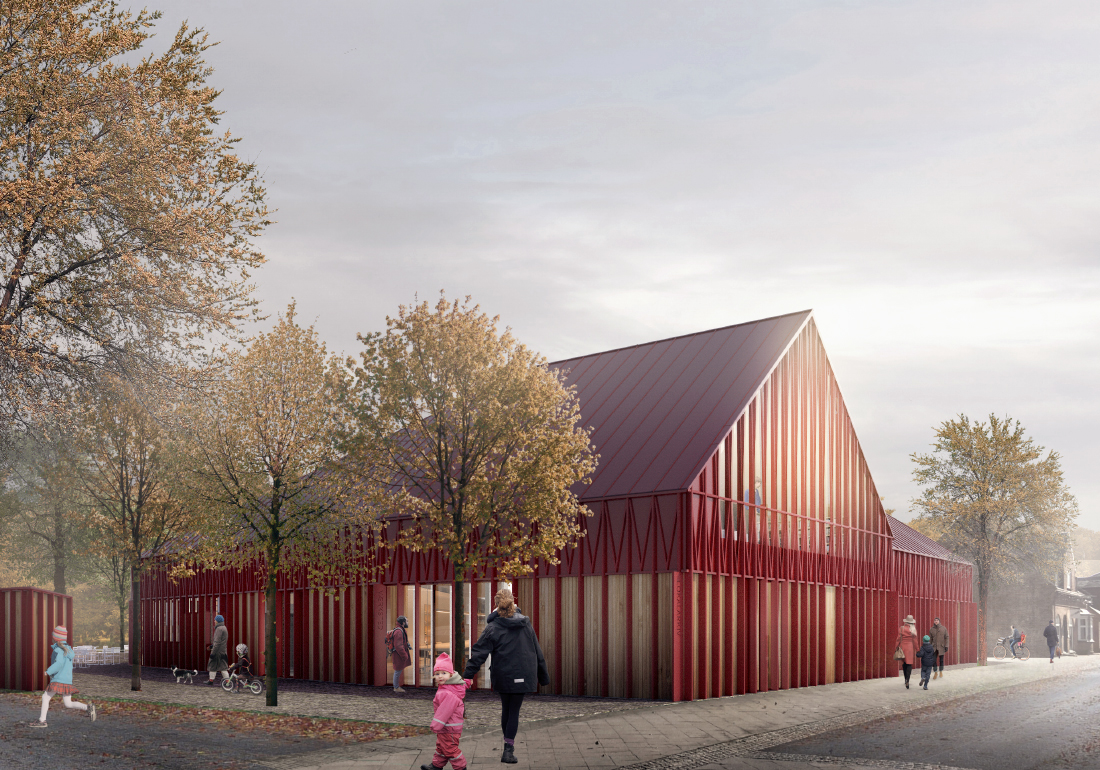
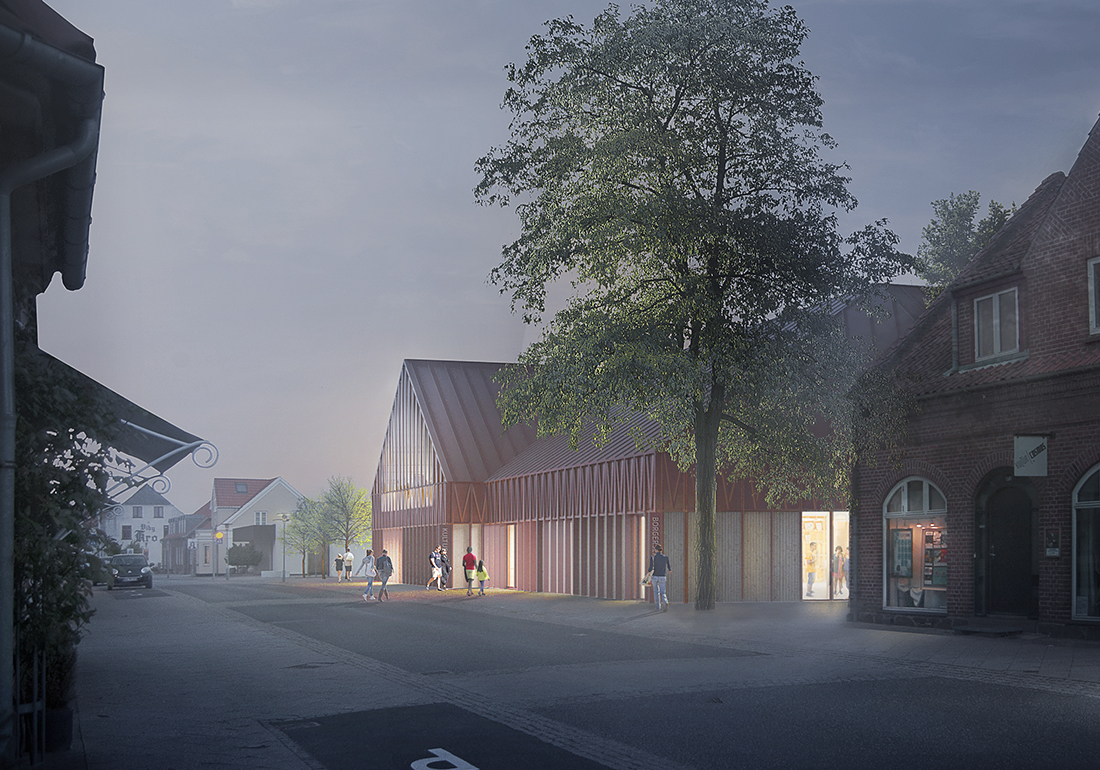
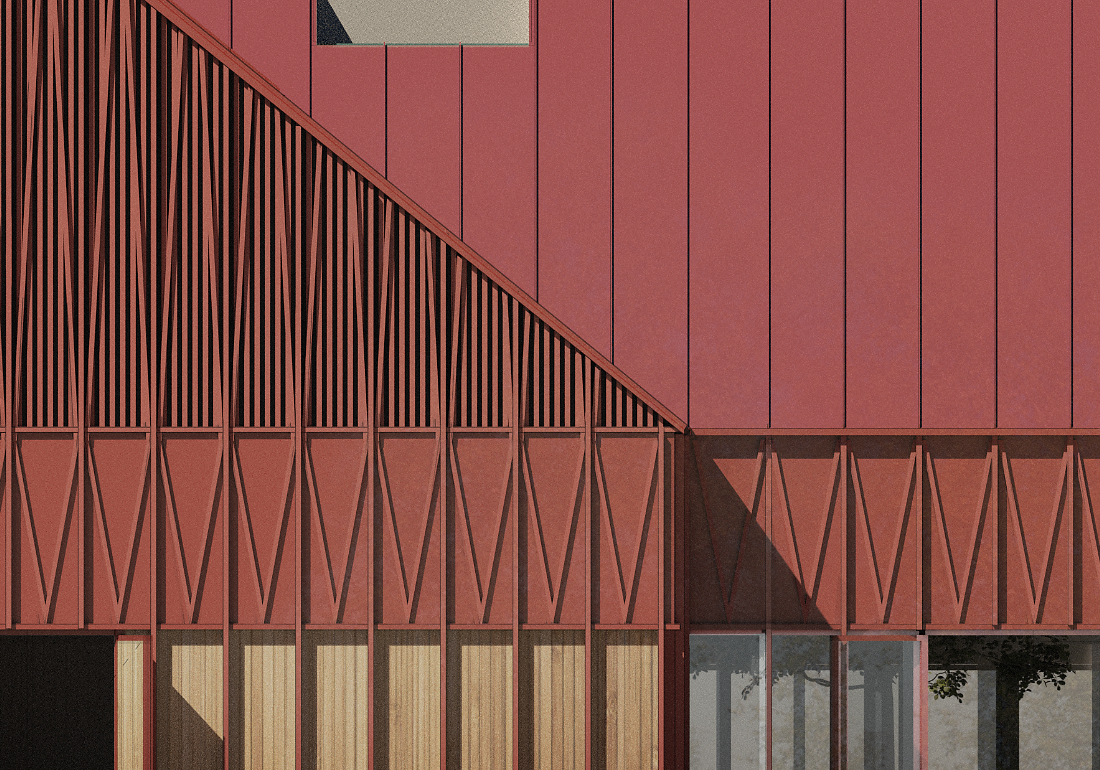
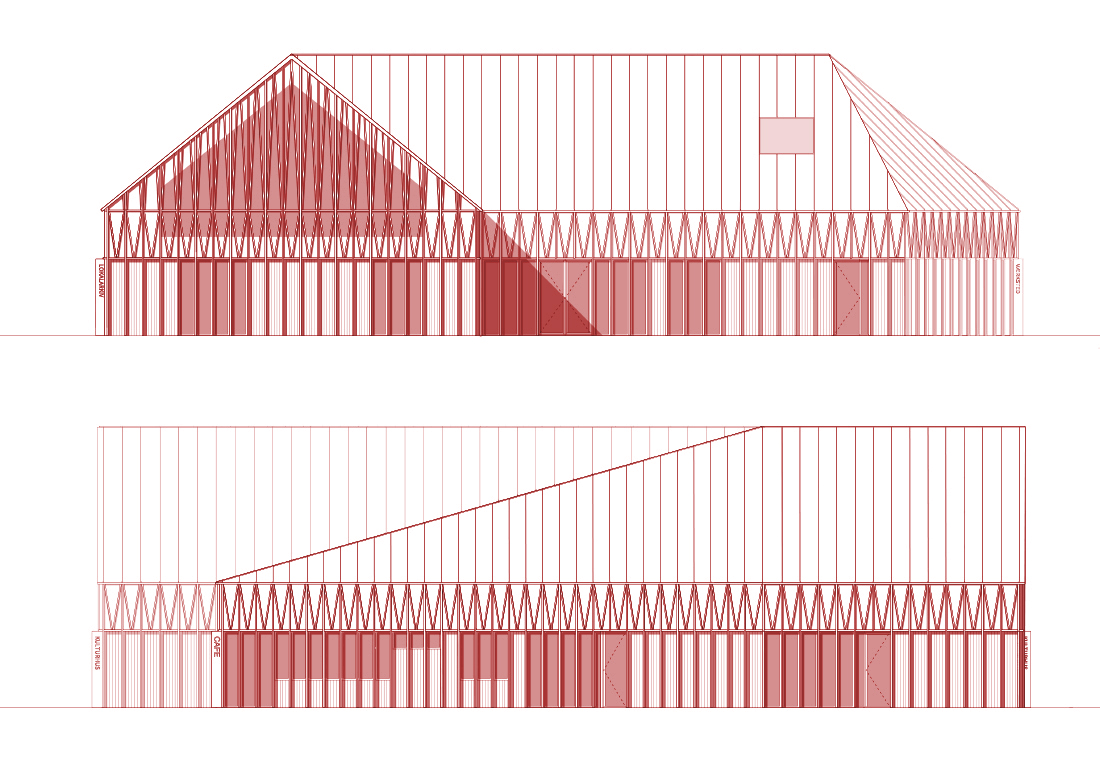
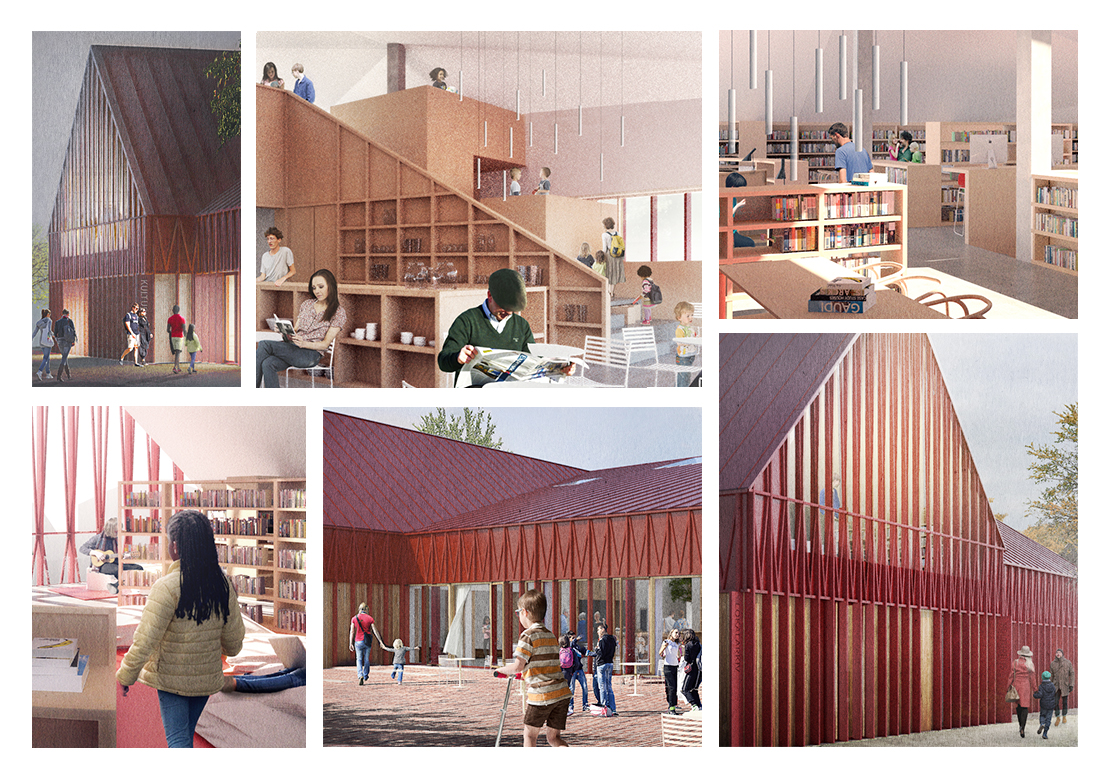
Vores forslag til et nyt kulturhus bygger videre på de arkitektoniske kvaliteter de historiske bygninger i stationsbyens hovedgade har. Kulturhusets arkitektur indpasses i gadebilledet ved at mime den kendte skala fra det tidligere mejeri. Kulturhuset bygger videre på stationsbyens knæk, hjørner og kroge i byrummene. Mod gaden har kulturhuset et genkendeligt volumen, der ligesom mejeriet arbejder med en fremadskudt gavl og en tilbagetrukket facade. Vinduer og gesimsbånd følger gadens vindueshøjde, mens saddel- og mansardtag også er kendte træk.
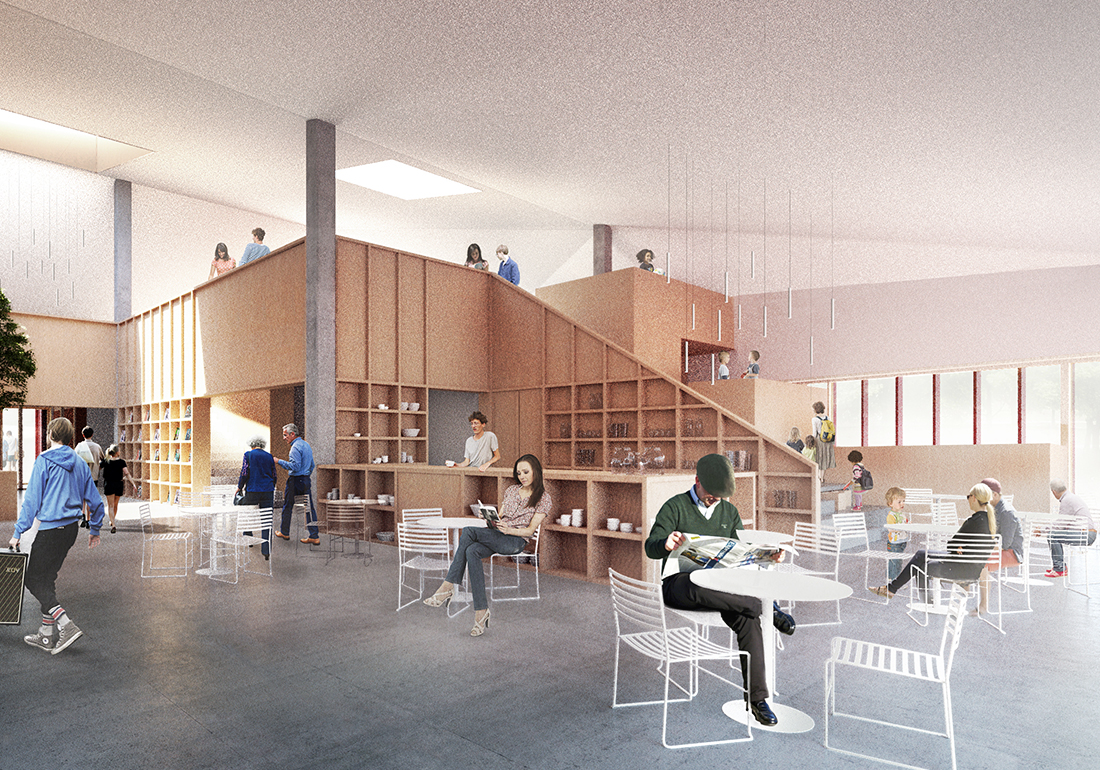
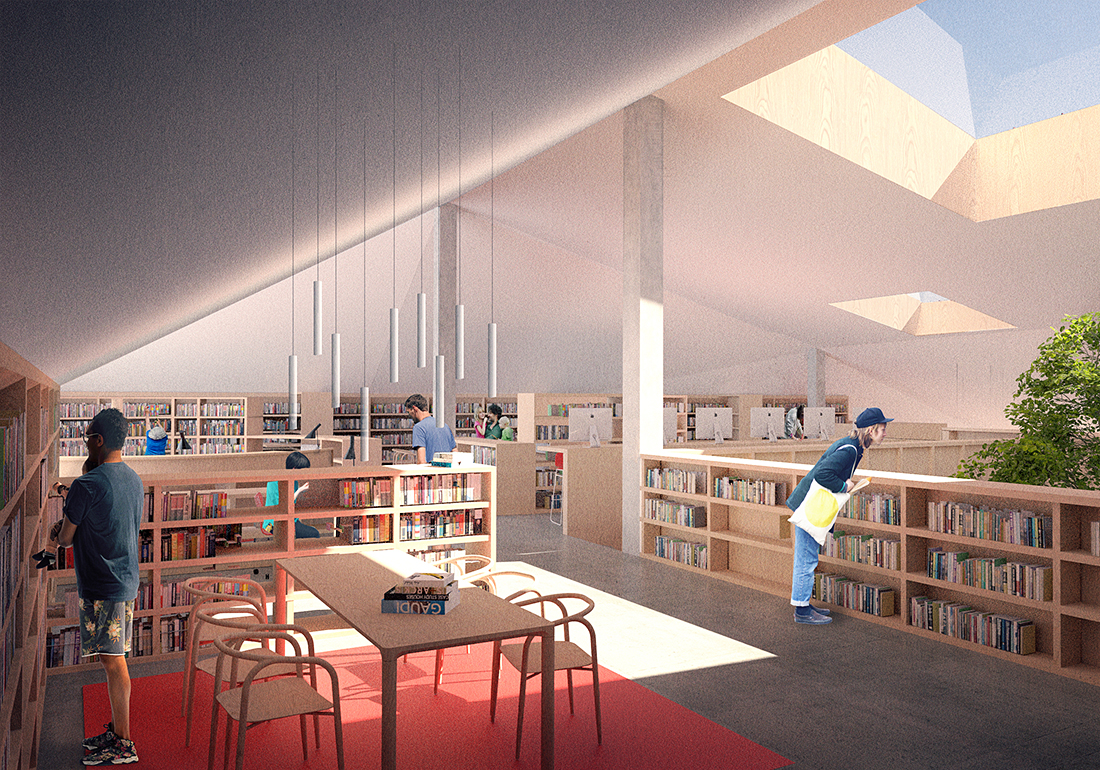
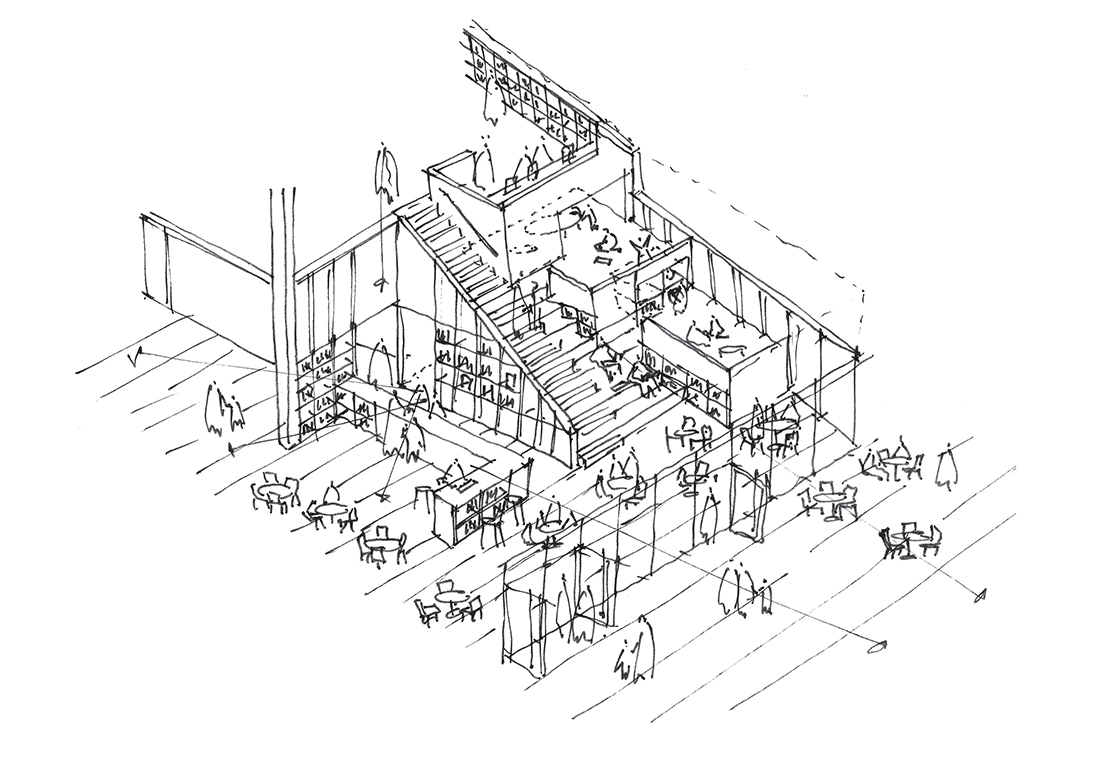
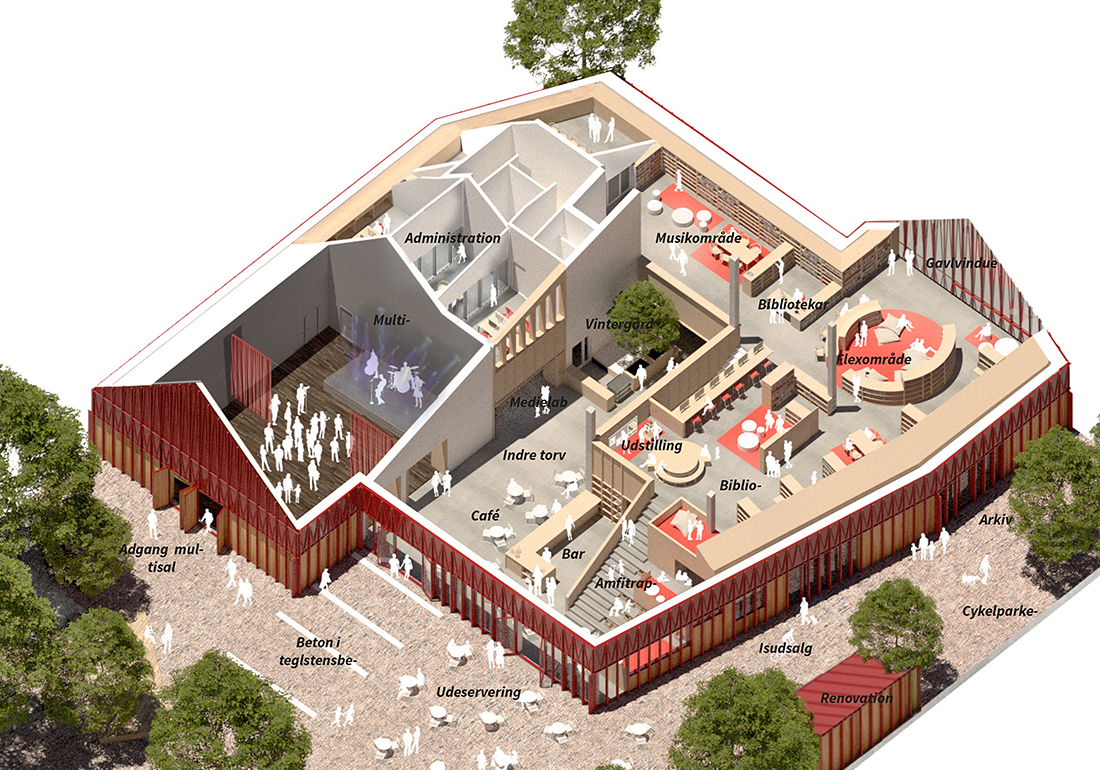
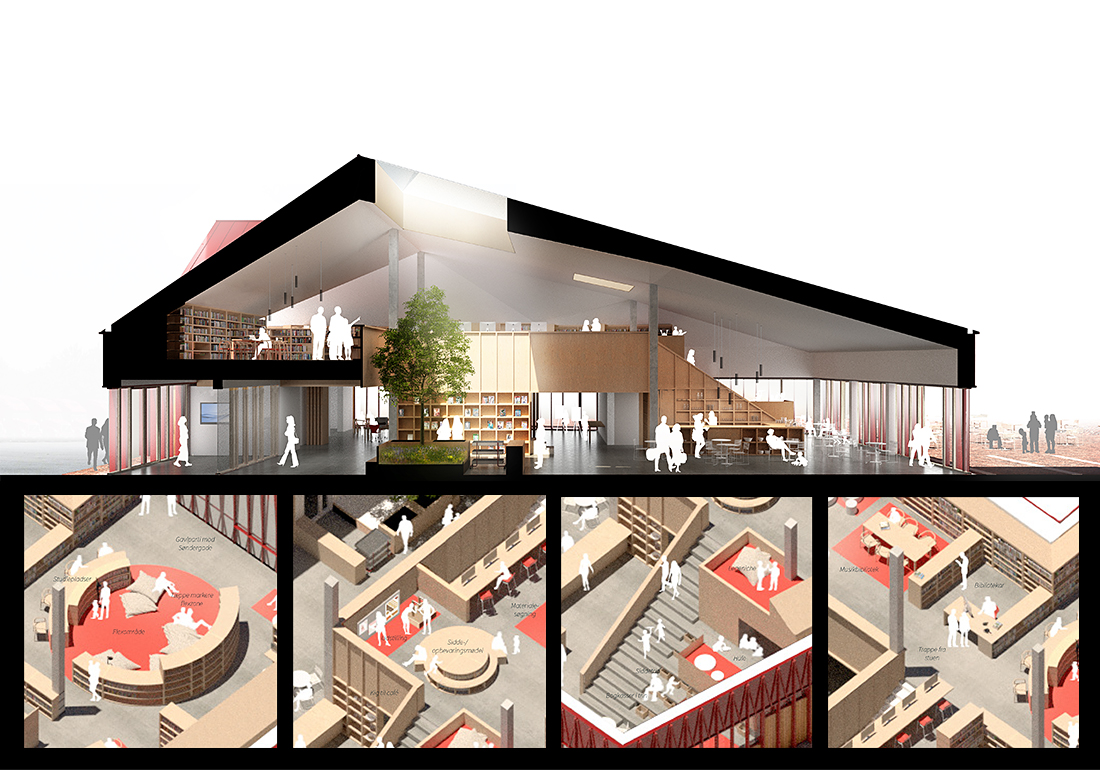
Kulturhusets funktioner foregår på byens torv. Torvet er gulvet og det markante tag er dybest set en overdækning over alle de aktiviteter og funktioner, der foregår på byens torv. Taget, mansarden og gavlen er markante flader, som ved en todeling af facaden, forstærker oplevelsen af den åbne stueetage og af det overdækkede torv.
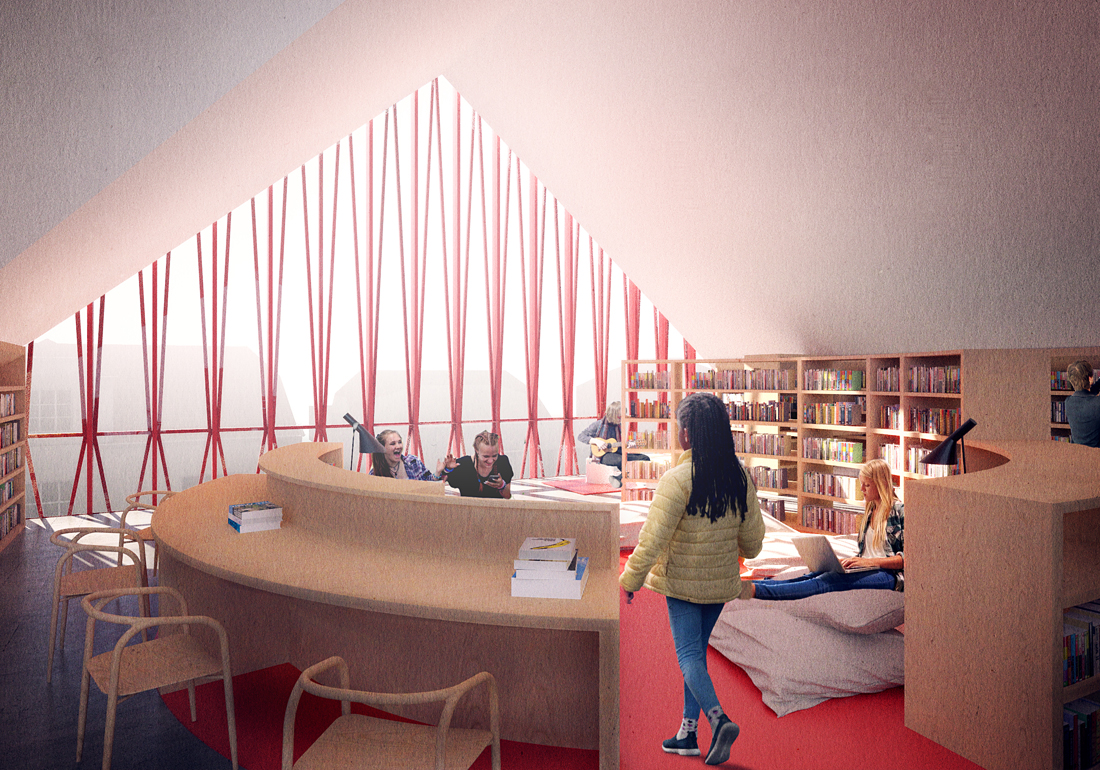
Strukturen, det gentagne søjle- eller bindingsværkmotiv signalerer en let bygning, noget pavillonagtigt, der giver indtryk af fleksibilitet af, at her kan man selv tilføre indholdet. Materialiteten og arkitekturen har referencer til lade-typologien og laderne var ofte de største bygninger, man havde på landet. Det var her, man kunne samle folk til bal og større forsamlinger.
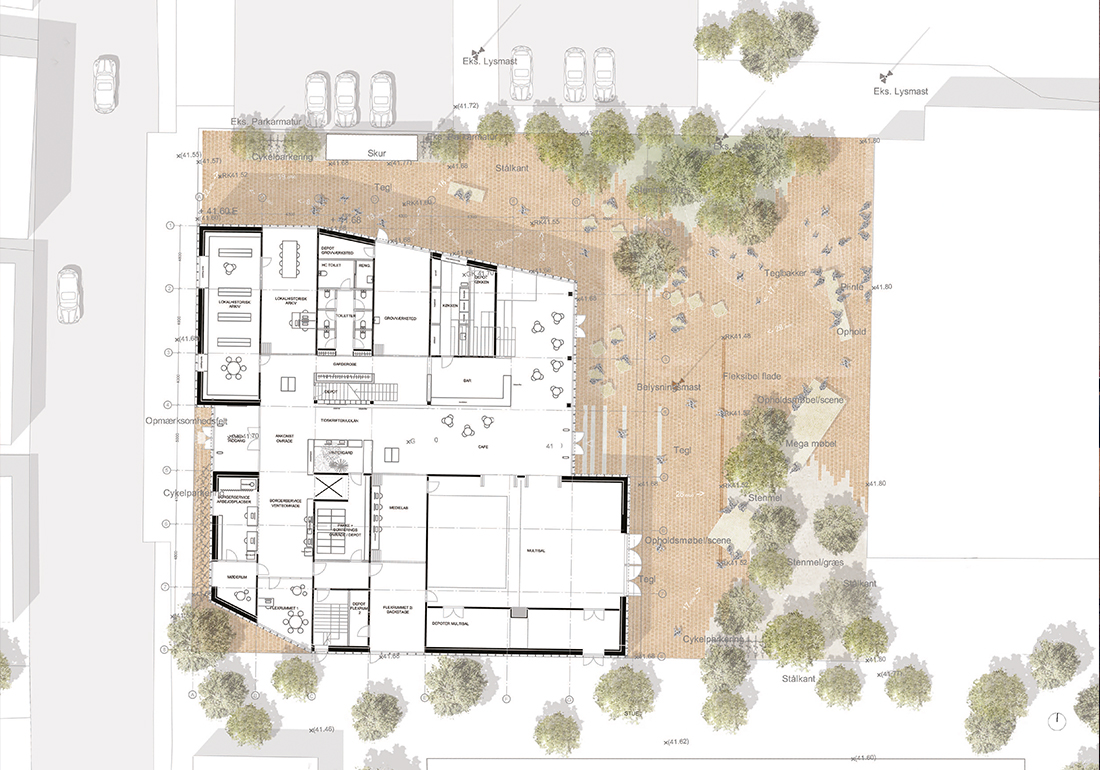
Kulturhuset er organiseret omkring det indre torv, der strækker sig fra Søndergade mod vest til torvet mod øst og skaber indgang fra det offentlige rum på begge sider. Indgangene accentueres fra begge sider af en forskydning i facaden, som danner et naturligt flow mod indgangspartierne i form af indrammede og nedskalerede uderum.
Previous project Next project
Culture
Transformation
Public
Private
Planning