FORANKRING OG FORNYELSE
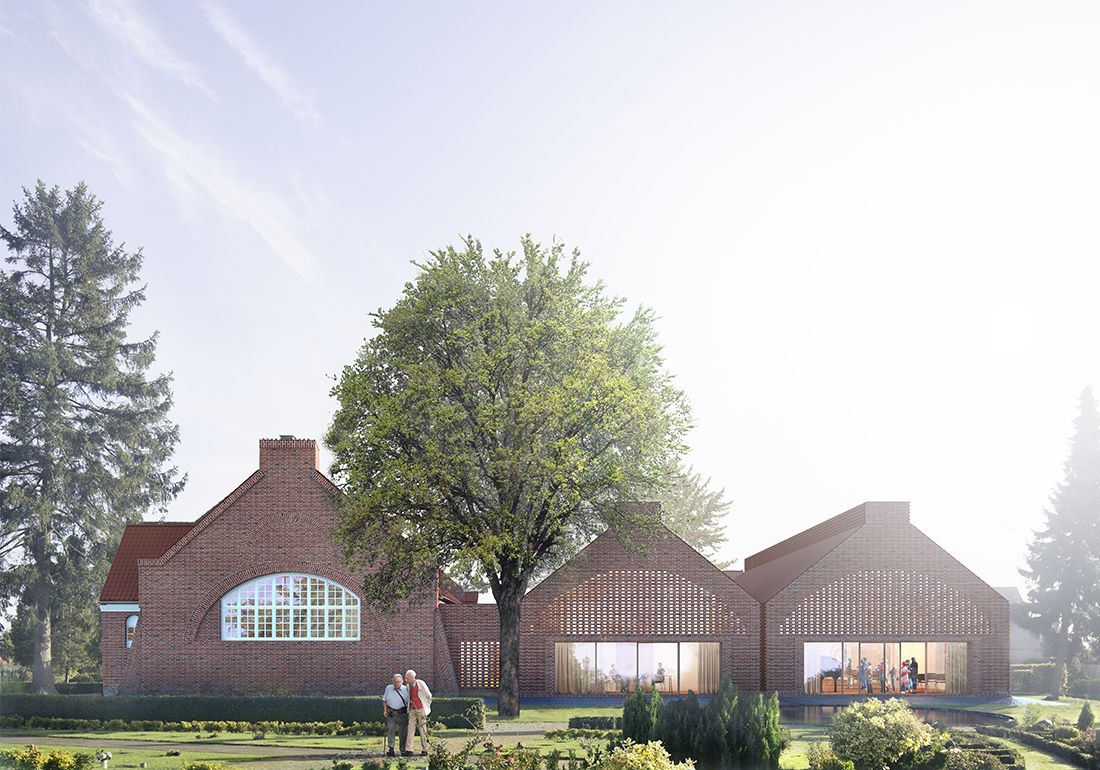
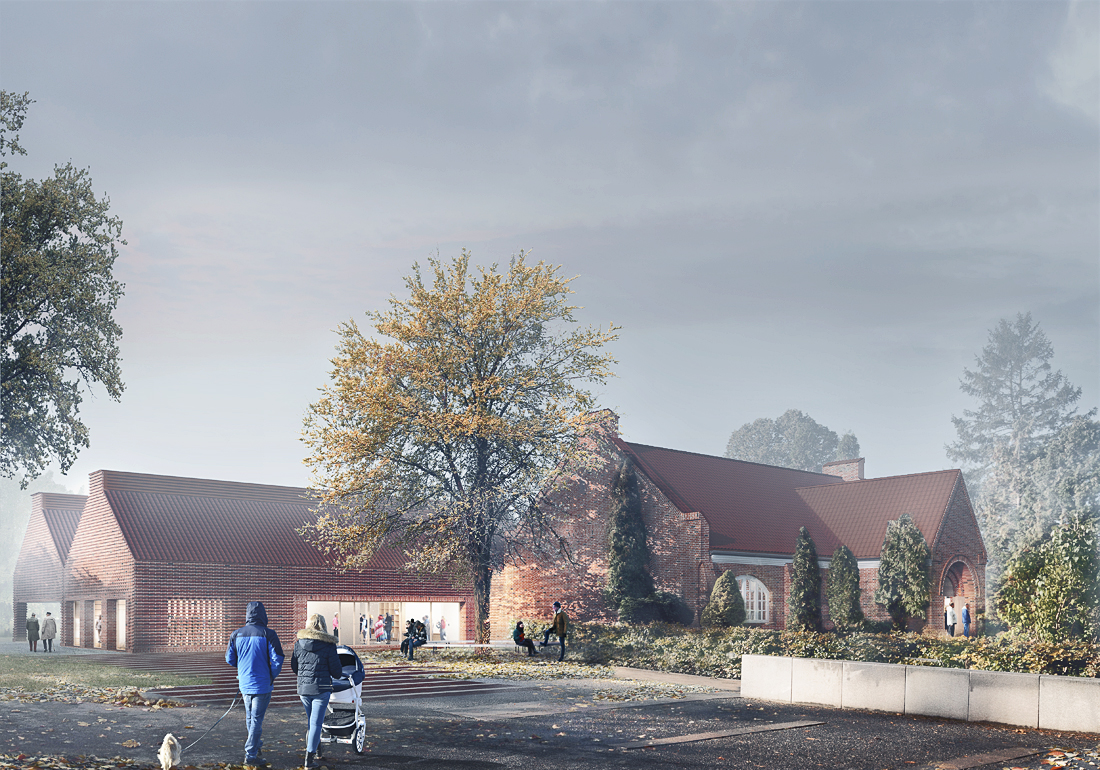
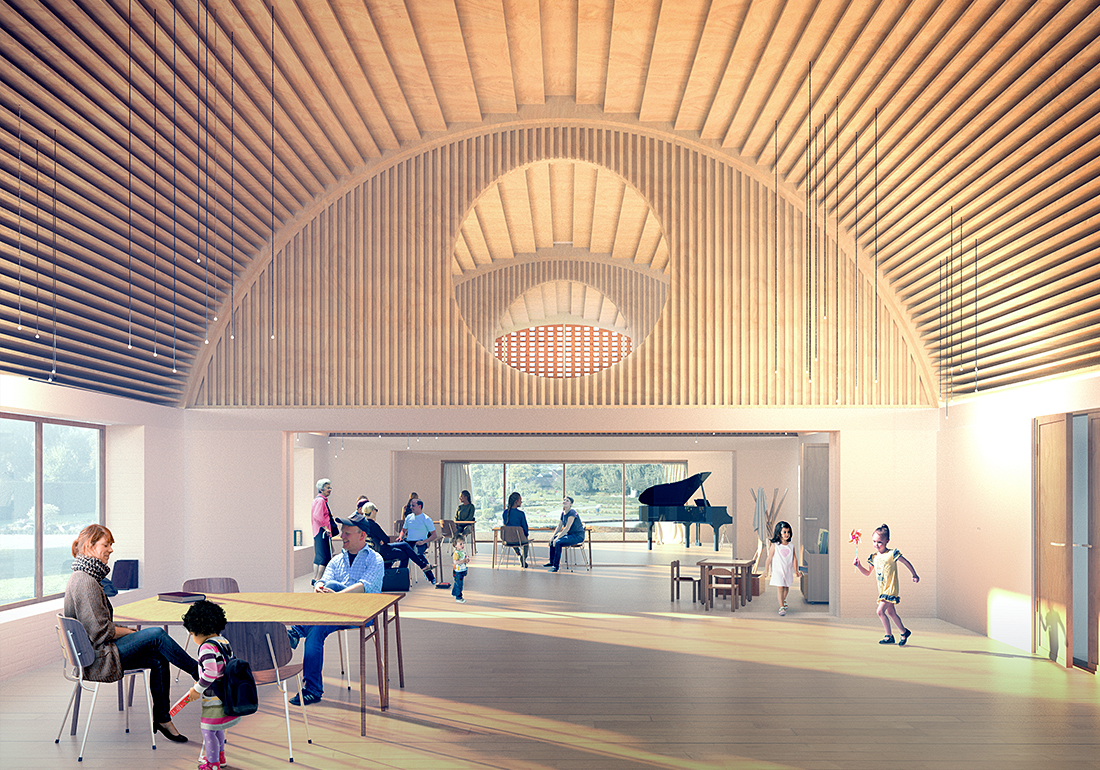
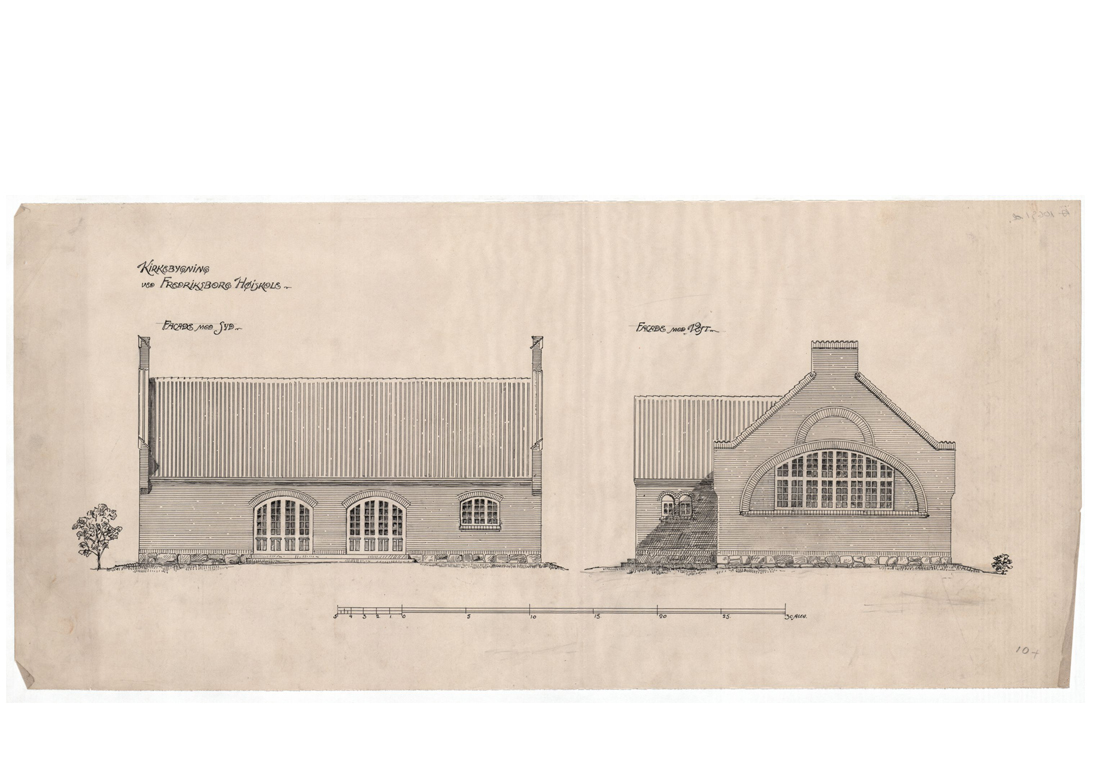
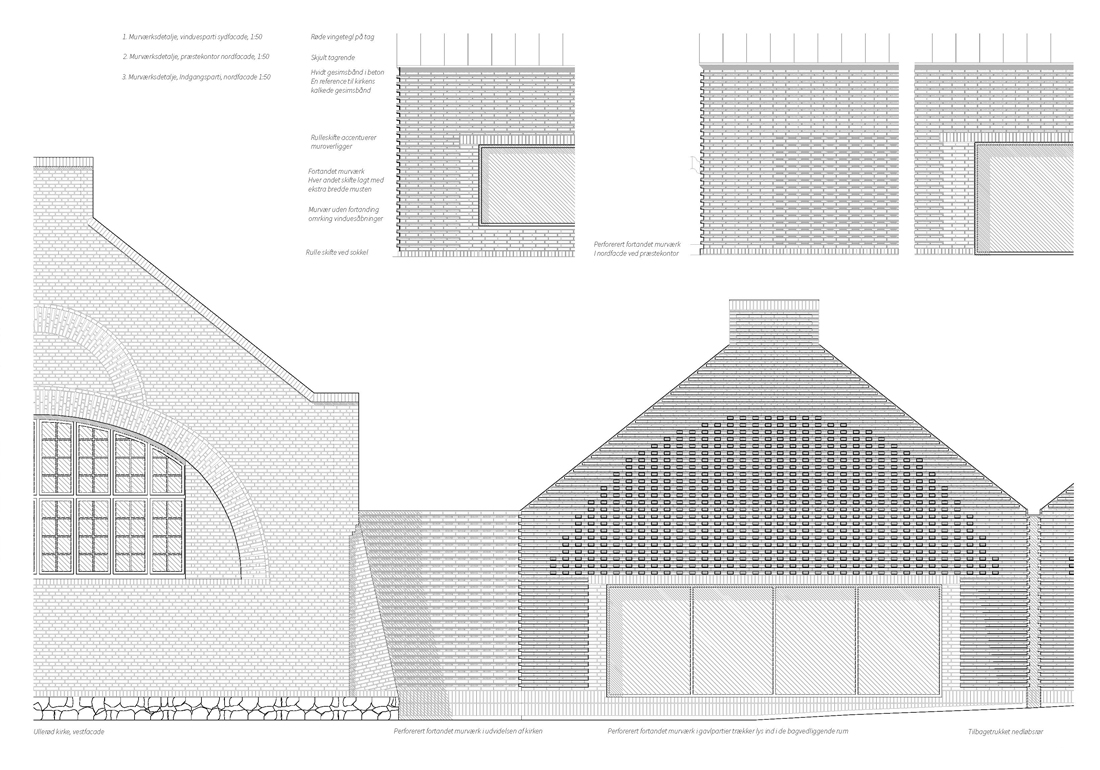
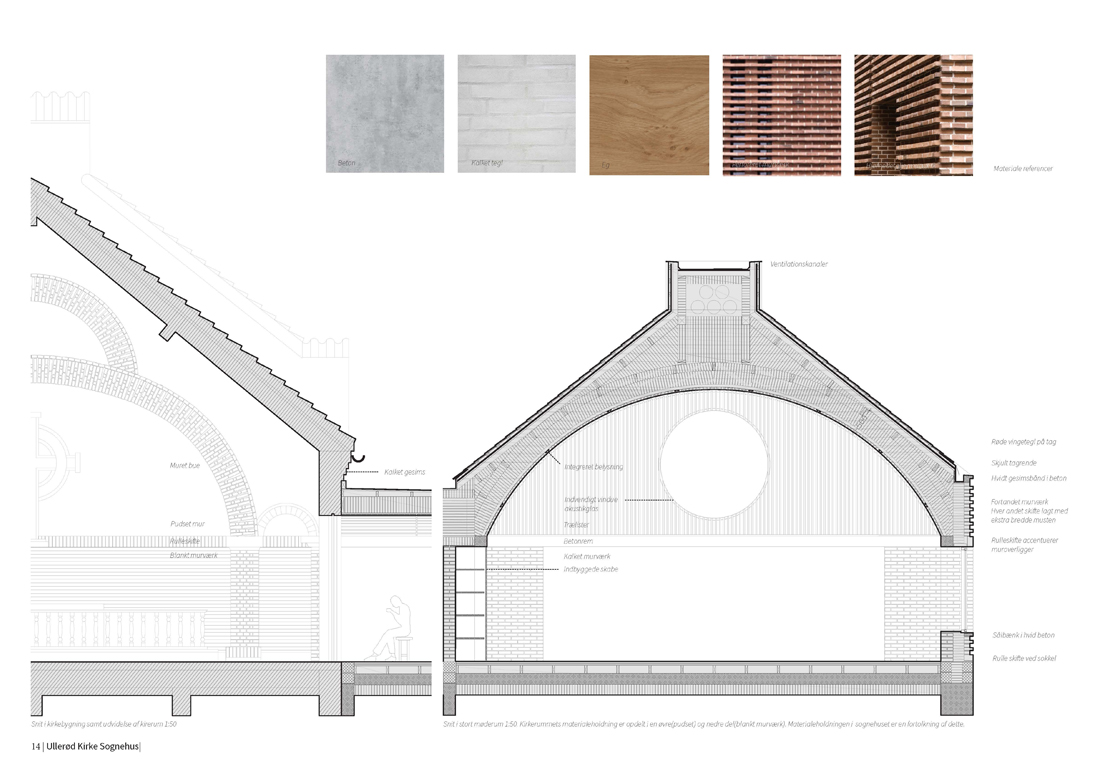
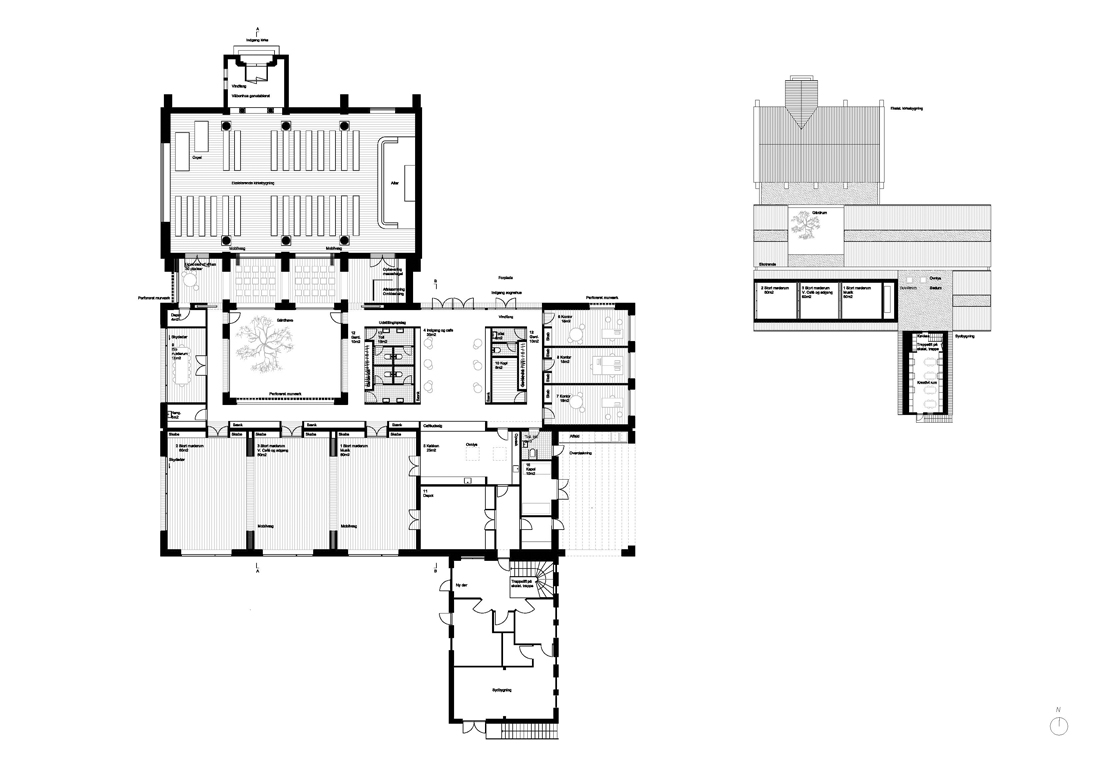
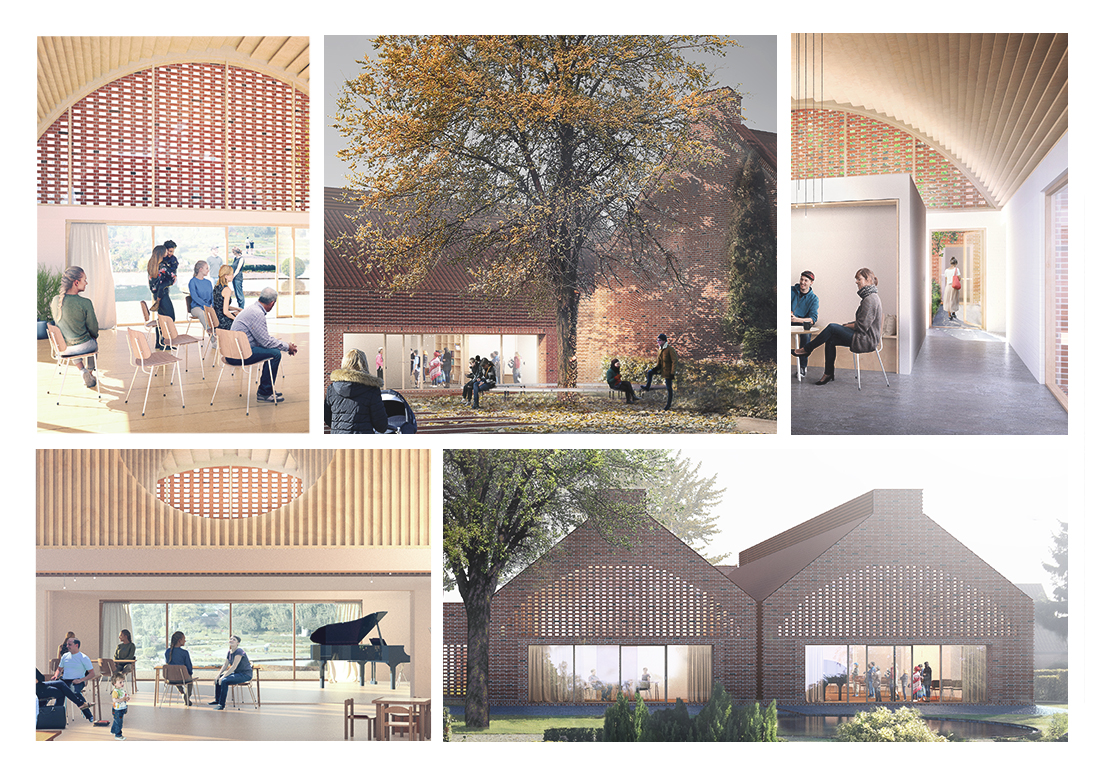
Ulrik Plesners kirke er bygget som kirke til Grundtvigs Højskole i Ullerød. Med basilikaens grundform og sine søjler og hvælv har den et indre formsprog og et syn på lighed der hylder naturen og den kristne tradition i form af middelalderens kirker og klostre. I forslaget genfindes de historiske inspirationskilder i både en ny kirkeudvidelse, i forsamlingslokalerne samt i en ny central gårdhave med reference til klosterhaven.
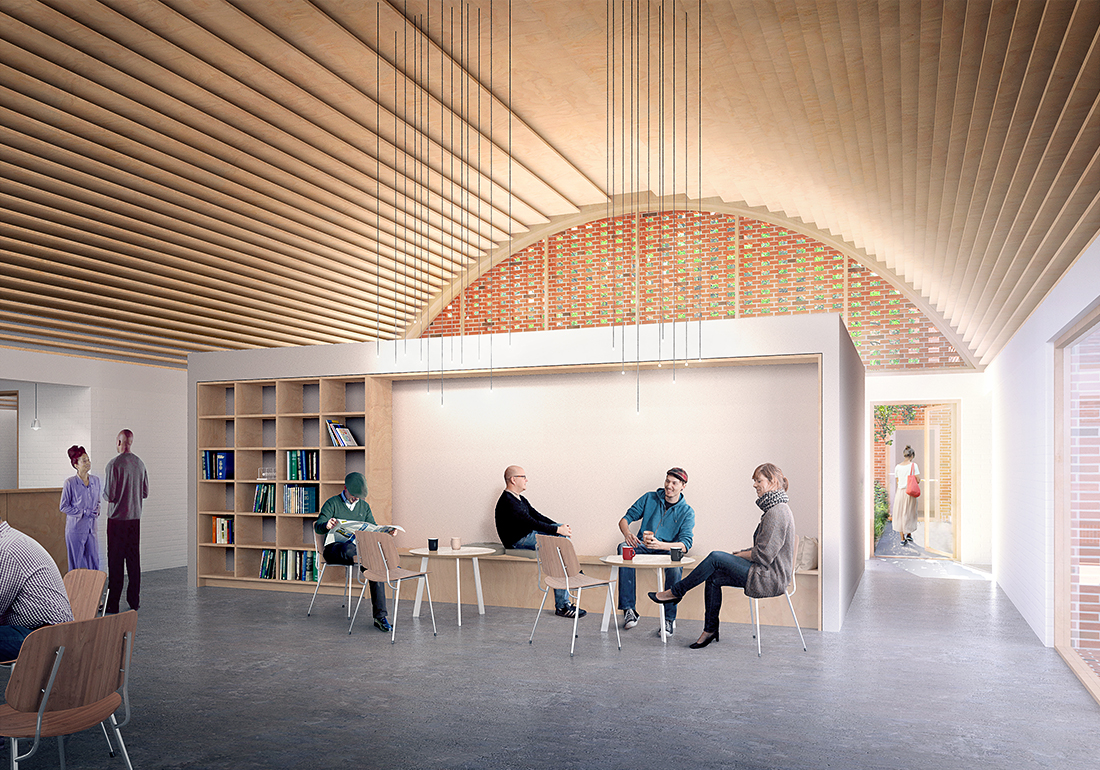
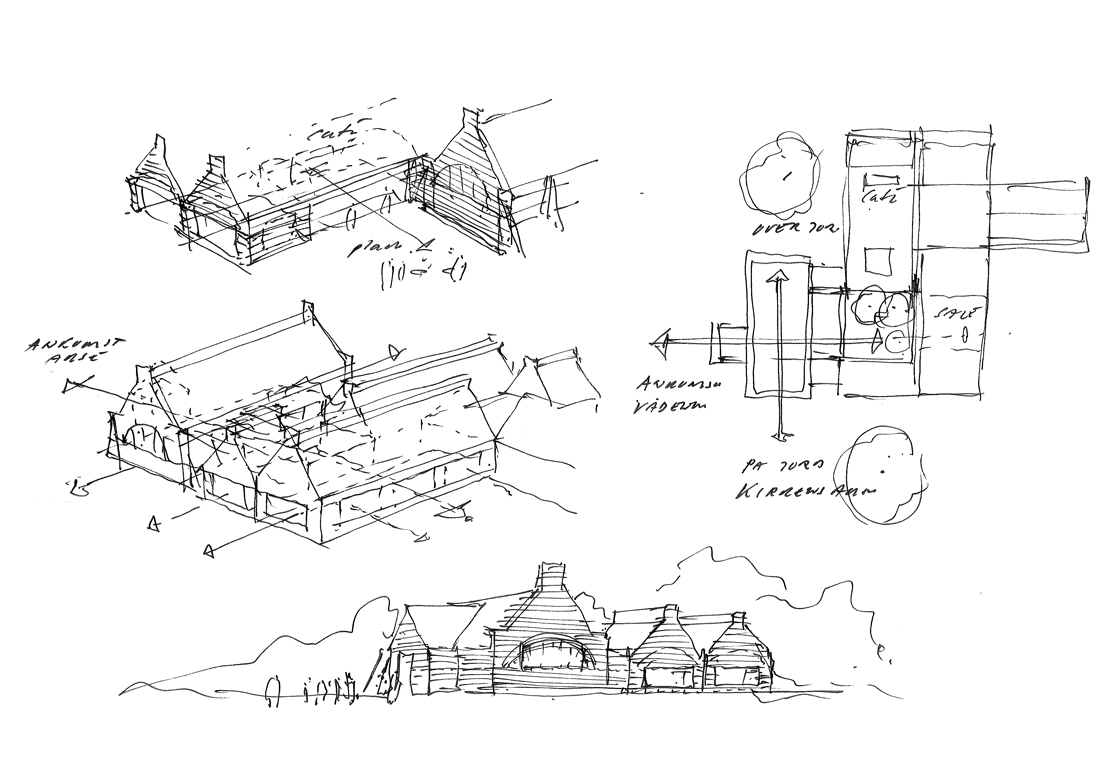
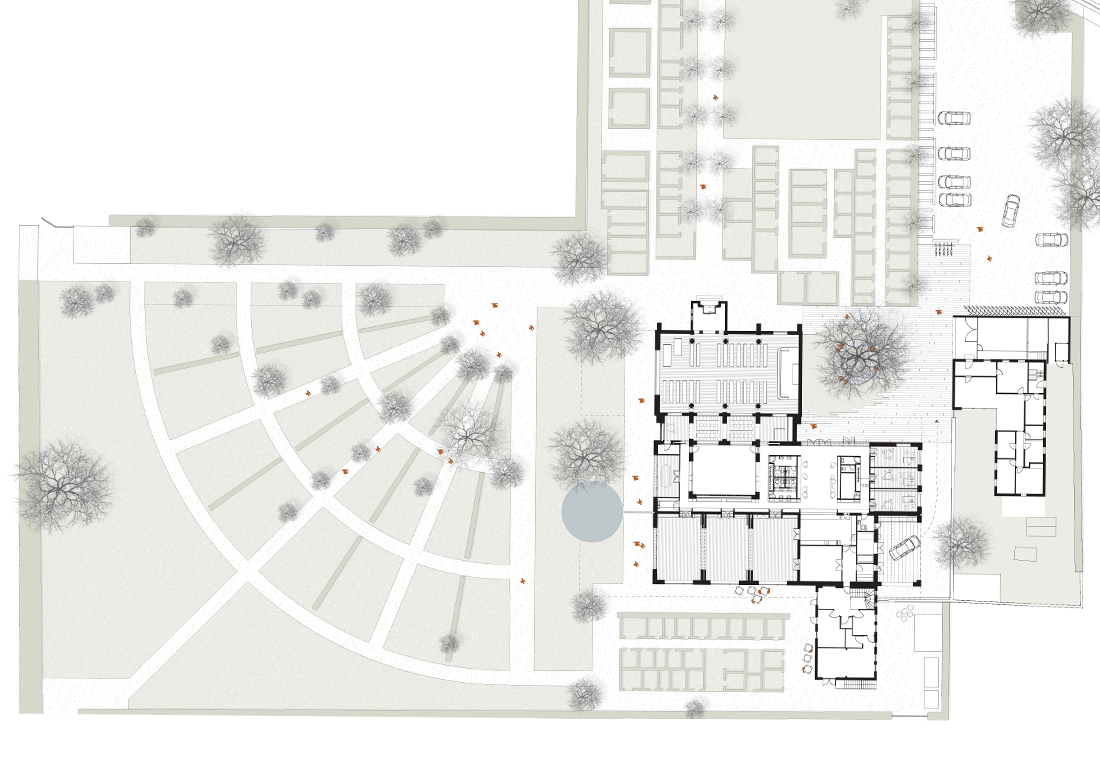
To længer spænder mellem det nye sideskib til kirken og sydbygningen og sikrer dermed, at man kan komme omkring i komplekset uden at skulle udendørs. Mellem kirken, sognehuset og præsteboligen etableres en forplads, der samler komplekset og skaber et intimt byrum mellem bygningerne.
Kirken tilbygges mod syd med et sideskib, der har forbindelse til den åbne gårdhave og sognehuset. Hermed introduceres en korsform, der understreger ankomstaksen fra våbenhuset over gårdrummet, der formidler overgangen til sognehuset. Gårdhaven er billedet på naturen, som i kirken er et væsentligt element.
Bæredygtighed er inddraget i projektet med helhedsorienterede løsninger hvor arkitektur, sociale funktioner, stor fleksibilitet og robusthed for fremtidige forandringer, energi- og ressourceoptimering er integreret.
Ambitionen er, at bygningen populært sagt vil være langtidsholdbar og omstillingsparat. Et højt kvalitetsniveau på holdbare og smukke materialer og arkitektoniske løsninger skal sikre en bygning med varige kvaliteter, samtidig med at organiseringen og konstruktioner giver mulighed for positive forandringer, ny brug af rummene og nemme måder at adskille de indre vægge på i fremtiden. På den måde sikres en bygning der både er rodfæstet i holdbare traditioner, og som samtidig er parat til de evige forandringer som tiden og nye brugere altid vil stille til et sognehus.
Previous project Next project
Culture
Transformation
Public
Private
Planning