
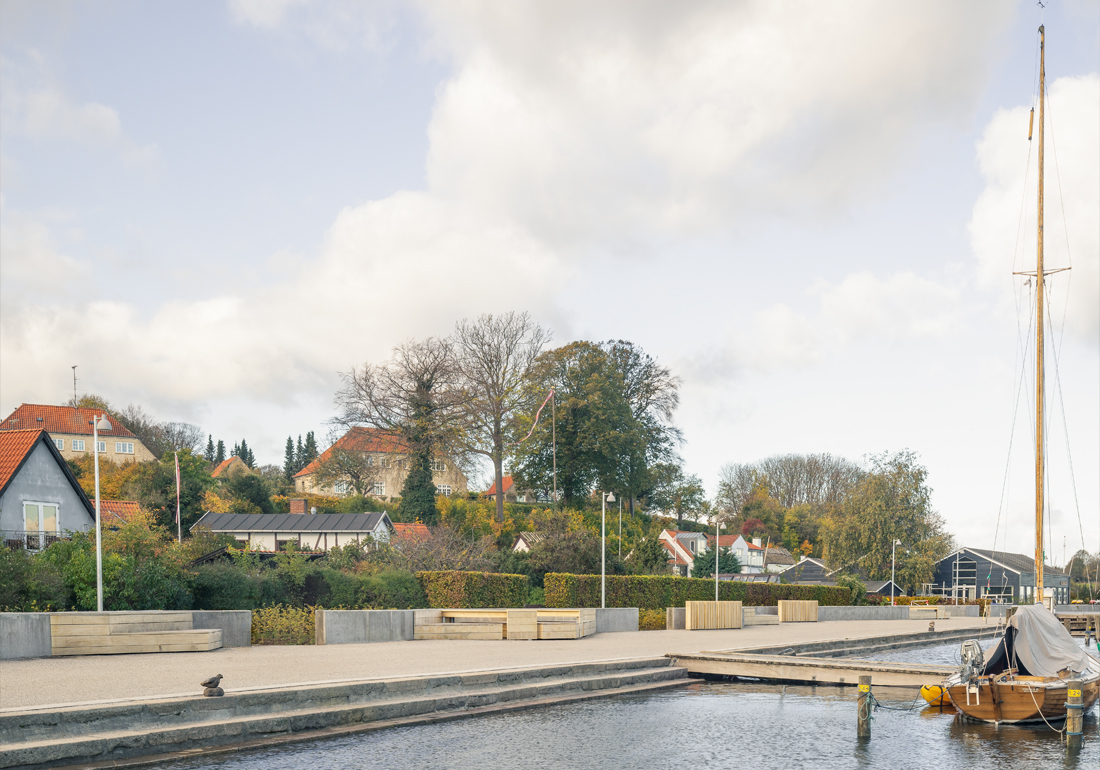
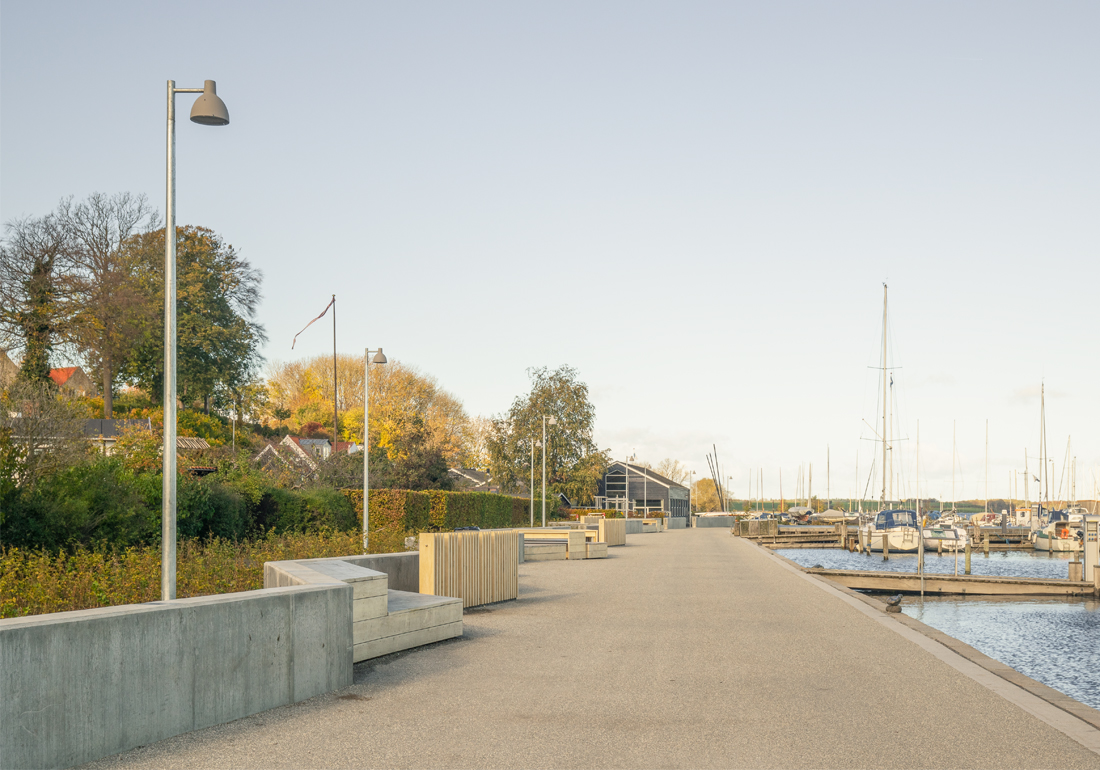
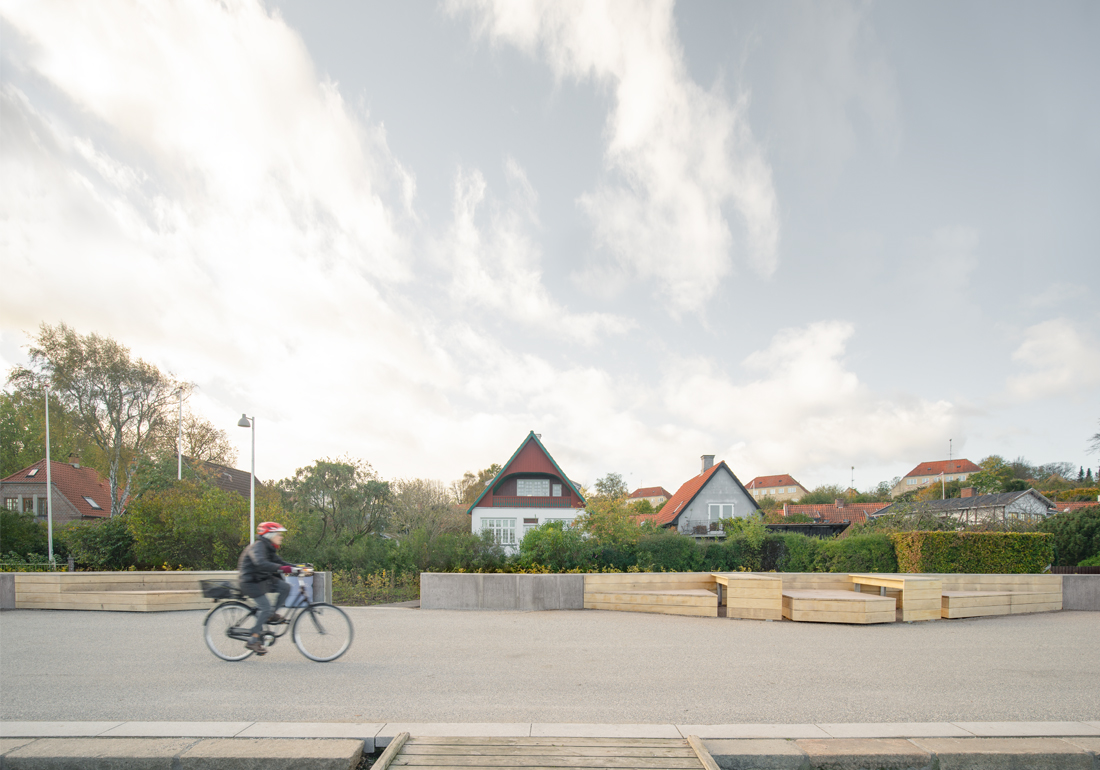
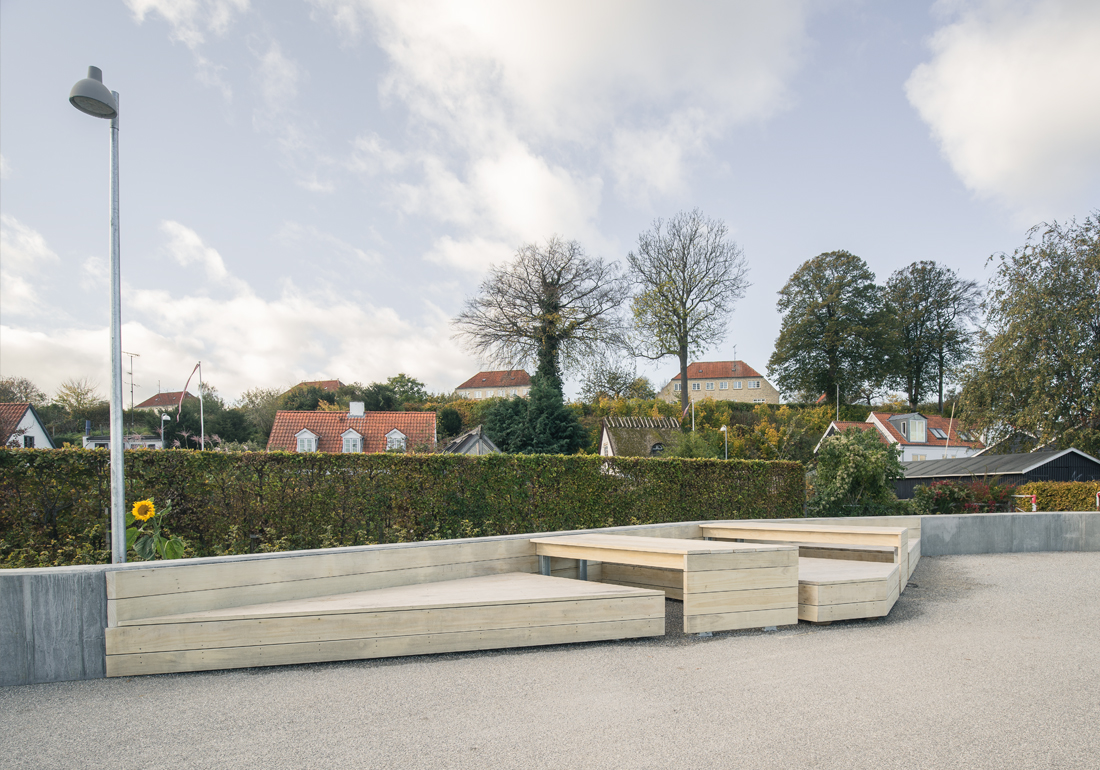

The coastal protection projects in Roskilde Inner Harbor and Jyllinge Nordmark combine protection against flooding with recreational urban spaces. In the west, a new harbor promenade will be established with fixed and mobile walls, seating furniture, and lounge areas. In the east, the area will be secured with sheet pile walls and a new fjord path providing public access along the waterfront.
The coastal protection projects include solutions developed for Roskilde Inner Harbor and Jyllinge Nordmark. The solutions aim to protect the areas from future flooding while also integrating recreational elements that make use of the many qualities of the fjord.
FIXED AND MOBILE FLOOD PROTECTION
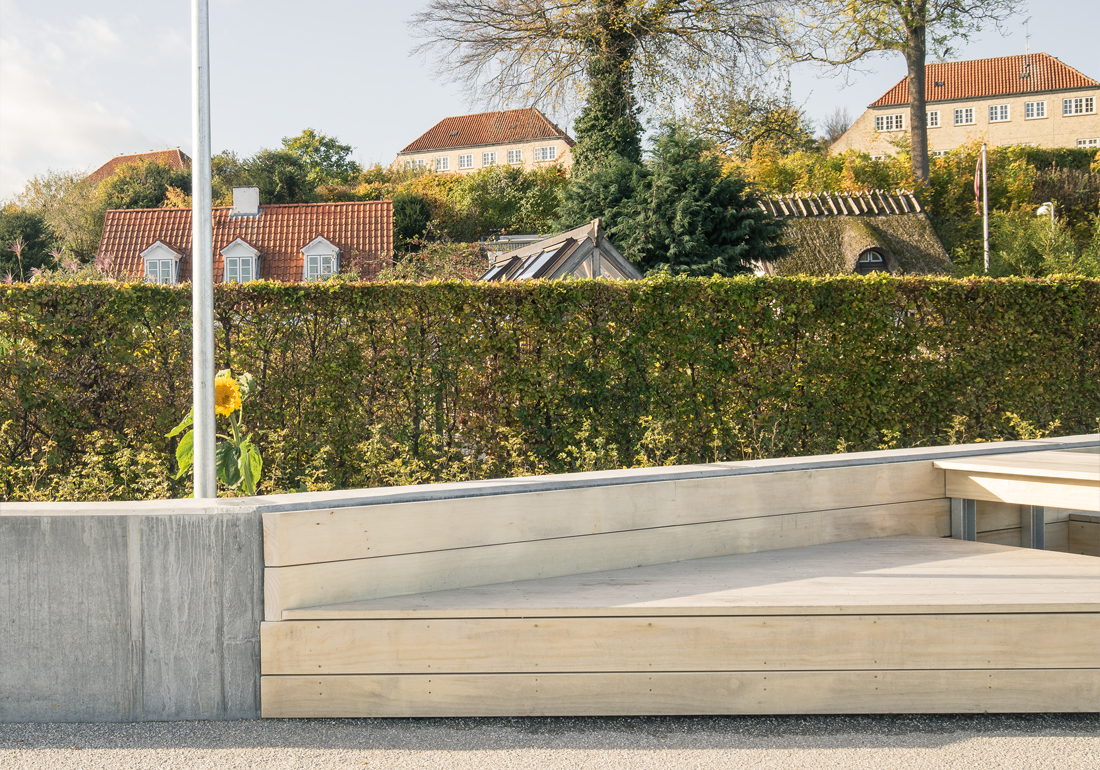
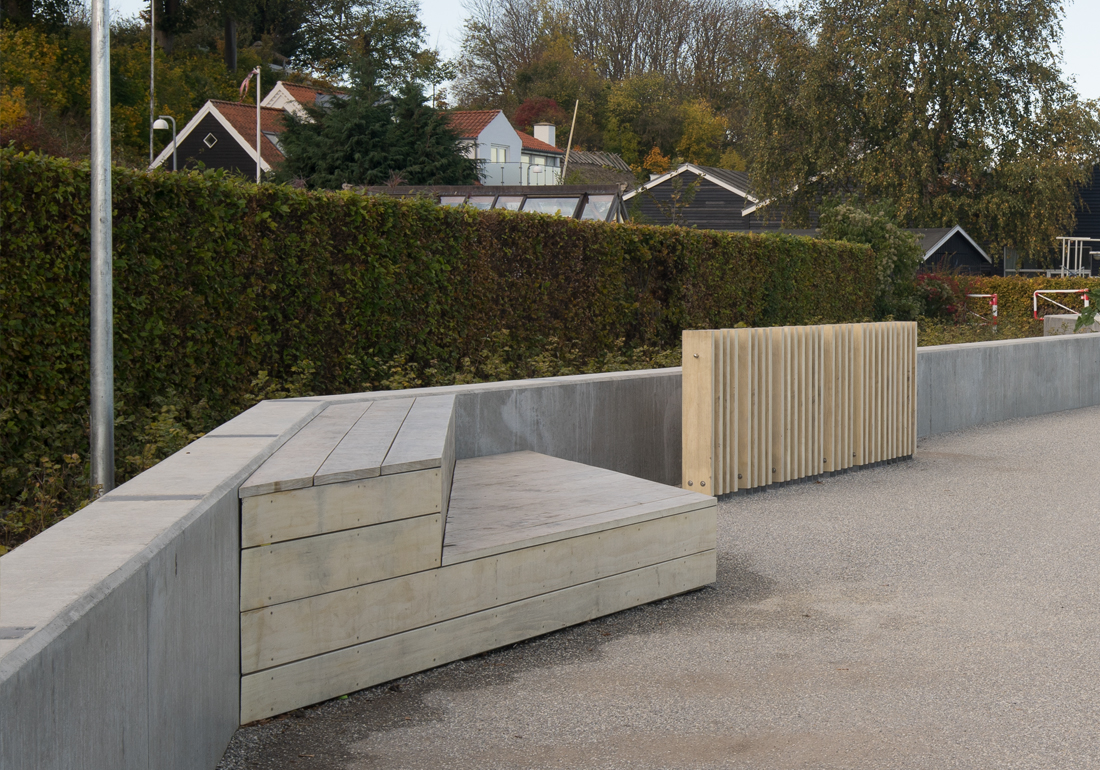
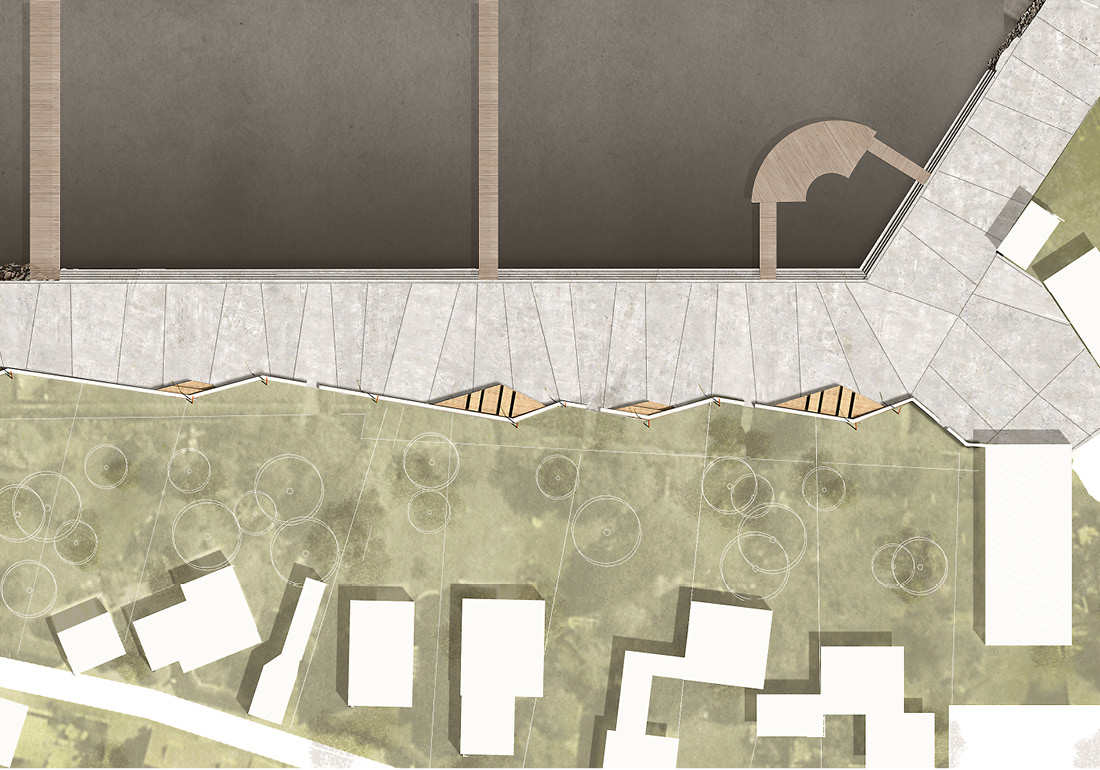
In Roskilde Inner Harbor West, the project consists of creating a new harbor promenade featuring a mix of fixed and mobile flood protection. Using simplified, broken lines, spaces, surfaces, and integrated seating furniture for relaxation have been created. A pavement of large cast concrete slabs with a brushed surface and a half-wall in cast concrete separates the area from the private residences and functions as permanent coastal protection. Detachable coastal protection, such as the aluminum board system, can be integrated up to level 2.75 in phase 2. Integrated wooden seating furniture introduces large wooden surfaces to sit and lie on, as well as new tables, benches, and trash cans, so that the furnishings and surfaces blend into a whole – a simple, calm framework for life at the harbor.
ALLOWING FOR PUBLIC ACCESS
In Roskilde Inner Harbor East, coastal protection is carried out in the form of sheet pile walls clad with vertical wooden planks of varying sizes, creating a lively, varied structure on the wall that makes graffiti difficult. Cast concrete is used as a quay edge, which can function as a seating plinth from the gardens. In some places, new sections of the fjord path are constructed in cast concrete with a brushed surface, allowing for public access along the wall and waterfront.
In Jyllinge Nordmark, coastal protection is carried out in a Natura 2000 area, with targeted interventions, including seating areas near a new dike, parking lots, and path systems.